
Gallery
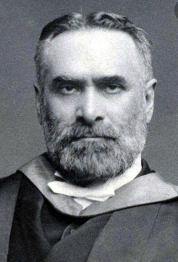
William Hastie.
1842-1903
Swamiji’s college rector for Swamiji’s BA degree. Swamiji was indelibly marked by Hastie – quoting Kant, Schopenhauer, Mill in his lectures and, while a mendicant in India, carrying the book, the ‘Imitation of Christ’ by Thomas a Kempis – which he translated into Bengali. Hastie was a Calvinist missionary, fluent in 7 languages, the first translator of Kant into English. Later, he was the professor of Divinity at Glasgow University.
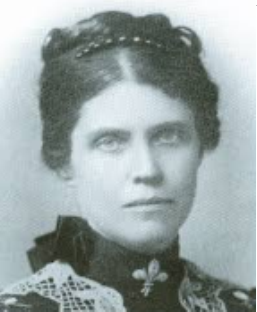
Sara Bull.
1850-1911.
Great supporter of Swamiji. It was through her contacts that Swamiji was invited to give his Harvard lecture. She gave significant financial help to Swamiji.
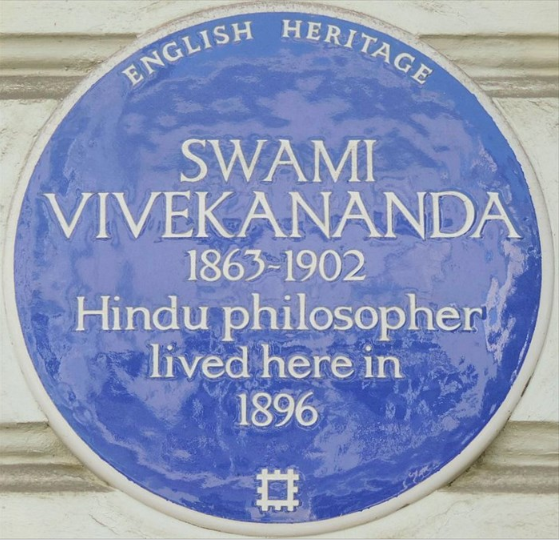
Swamiji’s plaque in London. 63 St George’s Drive. Thank you English Heritage.
He lived here, 6 May-19 July 1896. The tenancy was arranged by Edward Sturdy, Swamiji’s general factotum in London. Also resident were: Josiah Goodwin, Edward Sturdy, Swami Saradananda (just arrived from India), Mahendra (Swamiji’s brother), Henrietta Müller.
He had arrived in London (20 April) from an intense spell of New York lectures (Dec 1895-March 1896) where his message and his charisma had collected a strong, open-minded following. With his lecturing technique now highly developed, he was confident this message would work in London where he had friends. Further, Swamiji was always searching for wealthy donors for his grand plans to lift the poor in India.
On 19 July Swamiji leaves for a holiday in Switzerland, Germany and Holland, with the Seviers and Henrietta Müller. Returning on 17 Sept, he stays with Henrietta Müller in her mansion, Airlie Lodge in Wimbledon. And the Sanskrit Professor Deussen was still in tow, from Kiel, Germany.
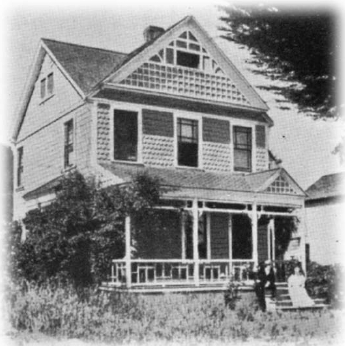
The Mead’s House
Pasadena, nr Los Angeles, California.
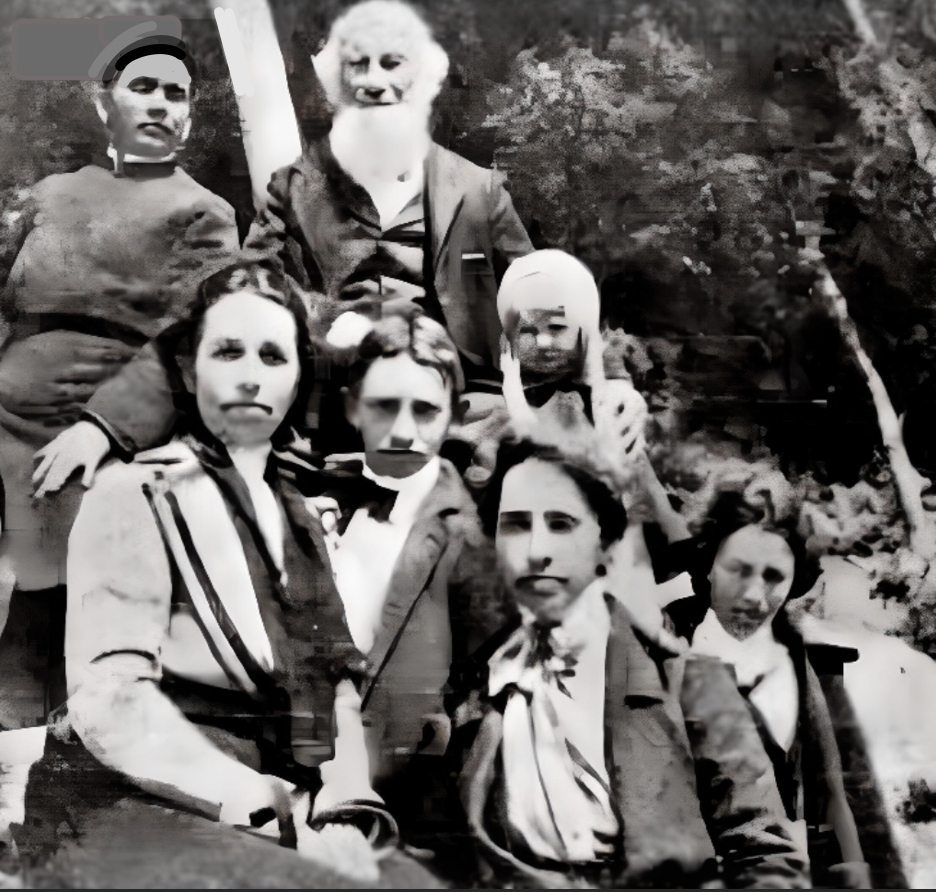
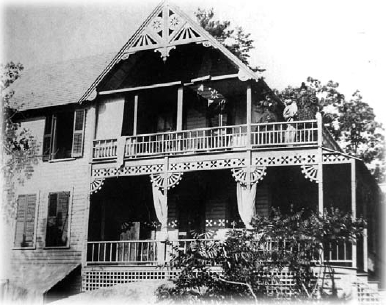
Dutcher cottage. –
Libby Dutcher’s cottage at 1000 Islands. St. Lawrence river. Here Swamiji gave exceptional classes for 7 weeks in summer 1895. He was teaching to a select few who wanted to learn. This was not lecturing to large numbers. The recorded classes became the book,’ Inspired Talks’. ‘Book 1 has 3 classes. Book 2 has 25 classes’.
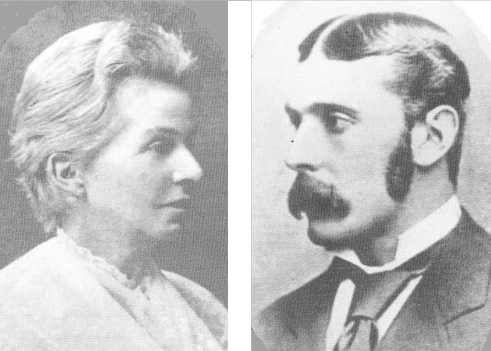
The Seviers.
They funded and participated in the building and running of the Mayavati Retreat Centre in the Himalayan foothills near Almora. This centre had been Swamiji’s dream, and they fulfilled it. All publishing was issued by this centre, managed by Charlotte Sevier.
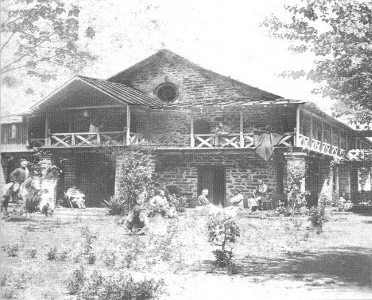
The Mayavati Retreat Centre in the Himalaya foothills at 2000m. Funded and run by the Seviers in cooperation with some of Swamiji’s fellow monks. Here were the publishers for all Swamiji’s English works for the Ramakrishna order. Many works were also published in USA.
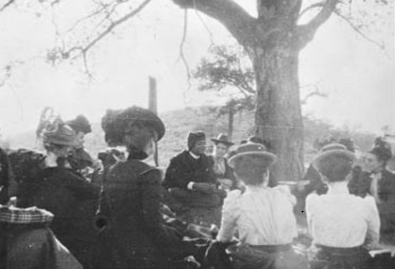
‘The air was supercharged’. Swamiji in centre. Picnics arranged by Alice Hansbrough near her house in Pasadena. She is Swamiji’s brilliant organiser for his California Lectures. Jan-1900.
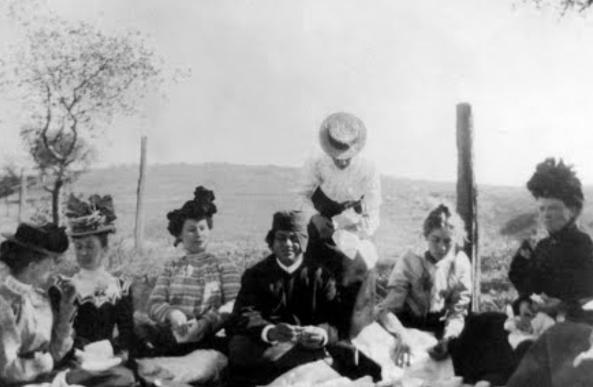
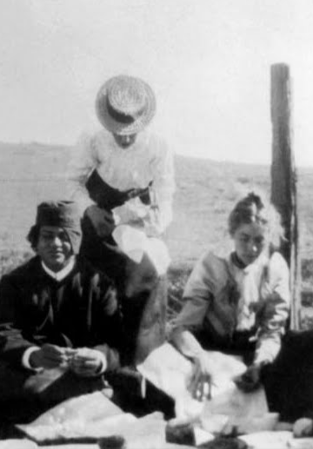
Swamiji with Alice Hansbrough on the right.
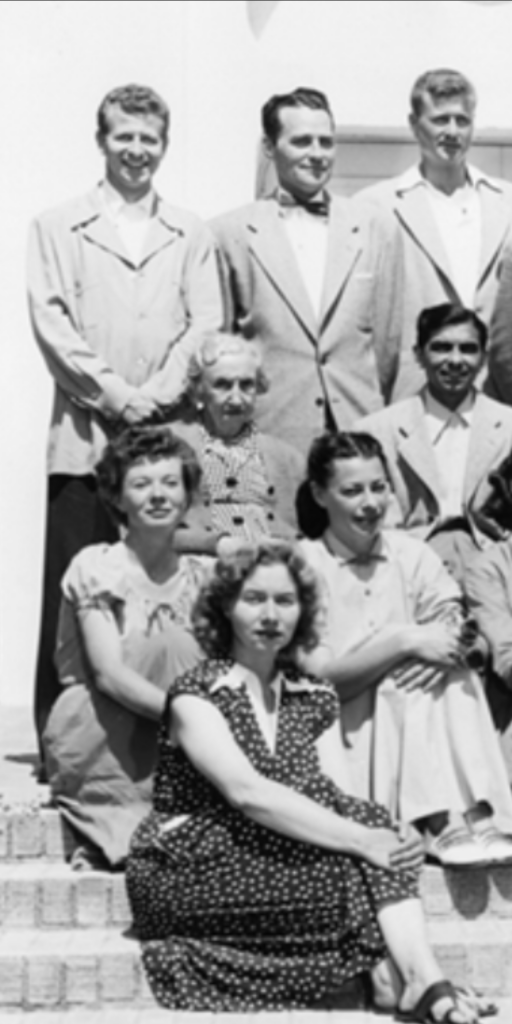
Ida Ansell, 1952. Elderly woman, 2nd row. Recorder of 17 of Swamiji’s San Francisco lectures.
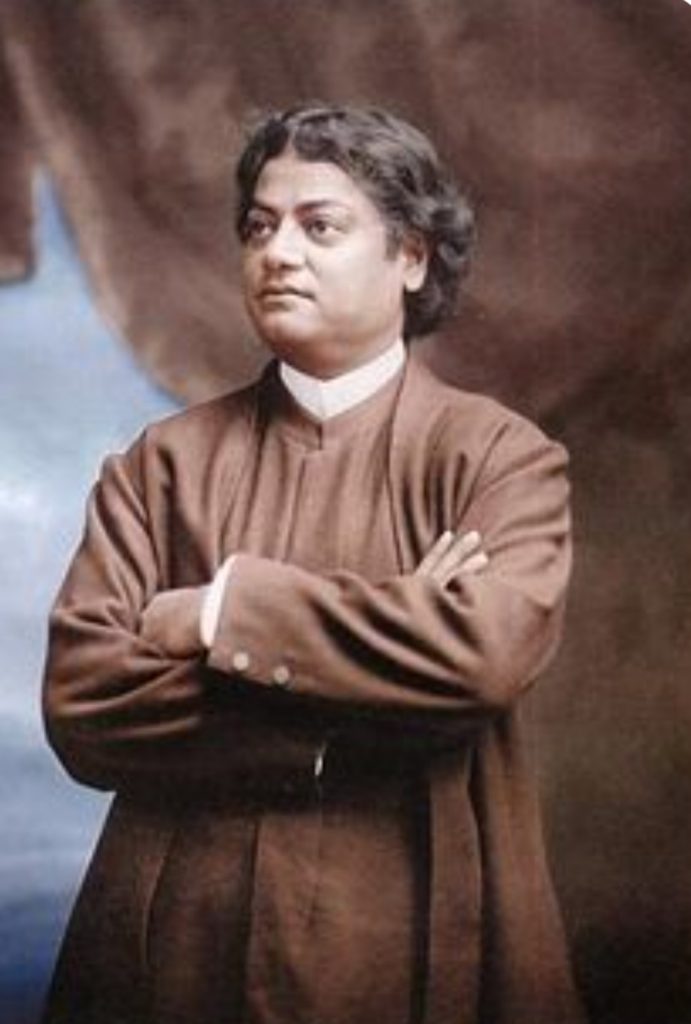
Swamiji.
1900 in San Francisco.
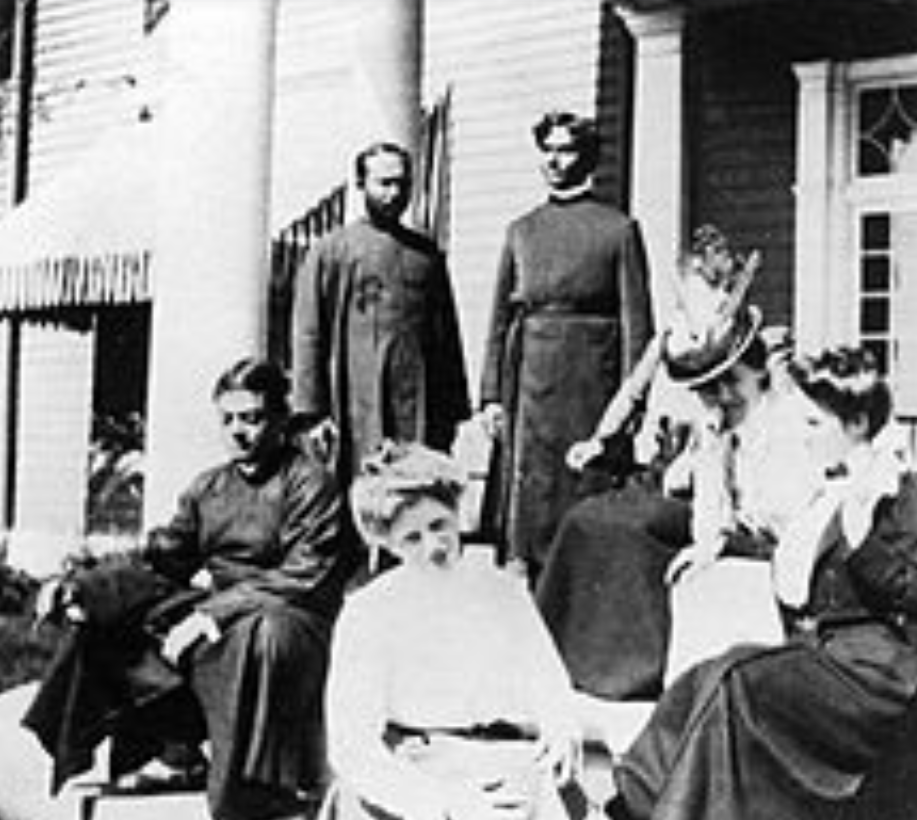
October-1899, in New York state. He is staying with friends. His 2nd visit to the West begins. Swamiji has arrived by ship via UK. 2 fellow monks have joined Swamiji to help with his work in the West. (Swami Turiyananda and Swami Abhedananda).
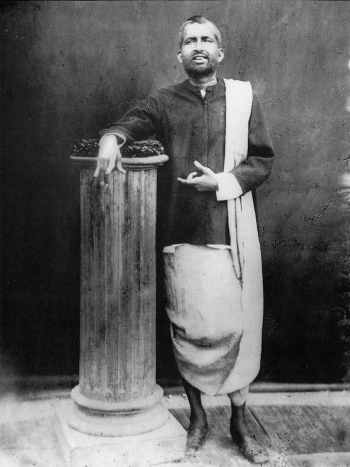
Ramakrishna.
1835-1885.
Hindu ascetic who moulded Swamiji into the World Teacher.
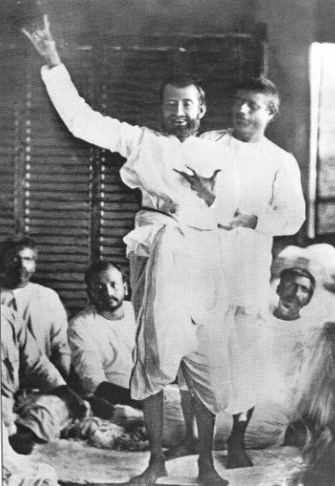
Ramakrishna in rapture. Hriday is beside him in case he stumbles. Taken in Keshab Sen’s house during evening vespers when they knew the mood of the music would bring on the rapture. 1879 ca. Kolkata.
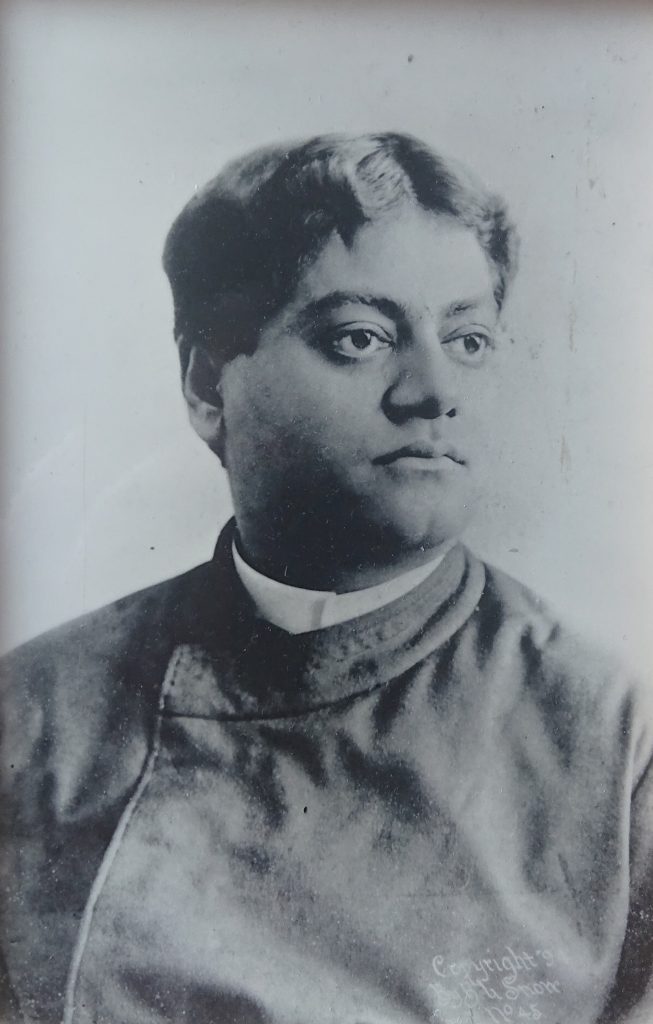
Swamiji has just arrived in America – when he was at the Parliament of Religions in Chicago in 1893.
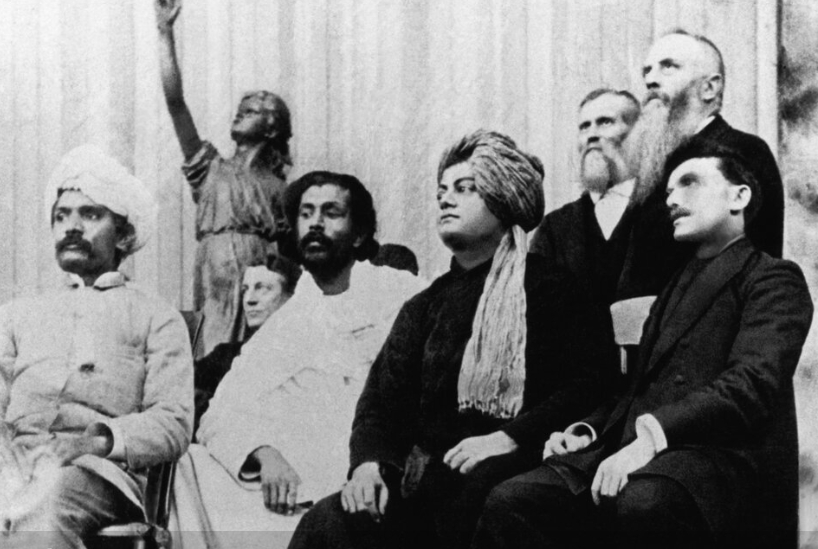
Swamiji, sitting, 2nd from right.
Platform at the Parliament of Religions. Chicago, Sept 1893. He is held to speak last as he pulls the greatest attendance.
Emma Thursby, 1854-1931.
Famous concert singer. Recorder of Swamiji’s talks under ‘The Pine’ at the Greenacre Conference, Aug 1894. A close friend of Sara Bull.
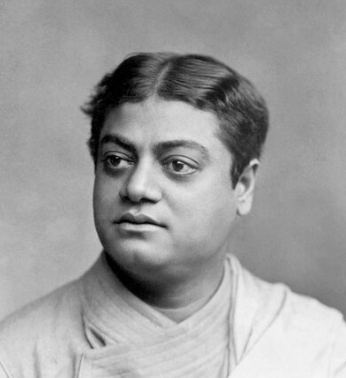
Swamiji in London. Sept 1896.
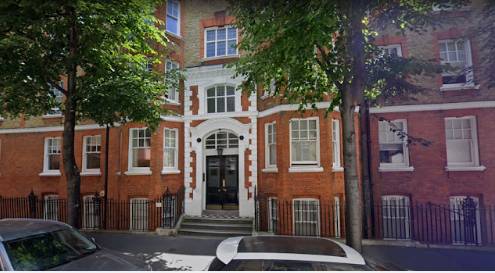
‘The Black Hole of London!’
Swamiji’s comment on 14 Grey Coat Gardens, his dark basement flat (10 Oct-15 Dec 1896). He stayed here with fellow-monk Abhedananda and Josiah Goodwin (Swamiji’s recorder and disciple). Nearby were his lectures at 39 Victoria St. He had moved to be closer to everyone after 3 weeks at Henrietta Müller’s large house out at Wimbledon, to her chagrin! Prof Paul Deussen too, had followed Swamiji to London in order to keep up the discussion, began in Kiel on 9 Sept. He was staying with friends at St. John’s Wood and returned around this time (the new term’s university classes had begun without him!).
‘I will throw you out of the window if you don’t speak!’ – On 27 Oct, Swamiji had insisted on Abhedananda making his first talk at an informal gathering.
“We have a flat – in the basement – but comfortable, & respectable, which are the two great requisites. It has dining room – 3 bedrooms, kitchen, bathroom, & a janitor. It is within 2 minutes of his lecture room – 39 Victoria St. We have a woman in for 3 hours in the evening; but otherwise I am in charge – do the cooking, &c. In this way we are at our own mercy with regard to cleanliness, a distinct advantage”. – Josiah Goodwin’s letter to Sara Bull, 22 Oct.
[‘The Black Hole of Calcutta’ was Calcutta’s infamous prison].
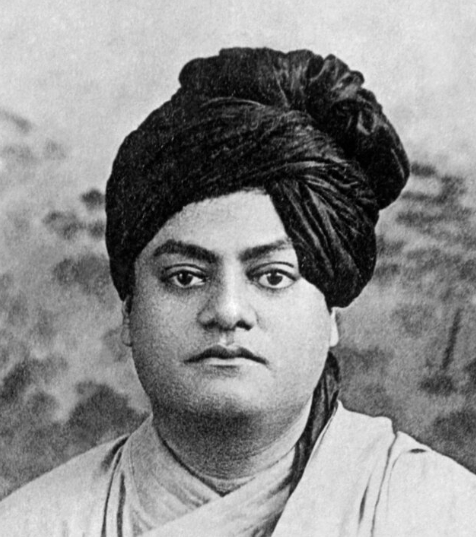
Swamiji in Colombo. Jan 1897.
He has the first stop in Sri Lanka, before his eventual return, as a celebrity, to Kolkata and his fellow monks.
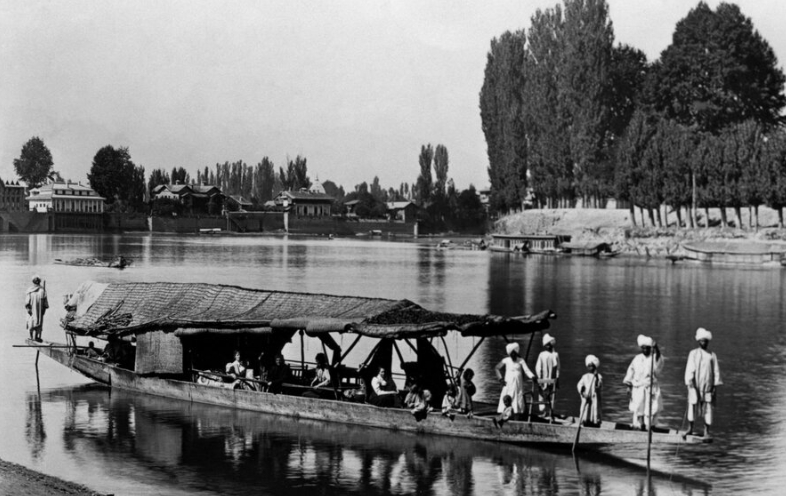
Houseboat, Kashmir. 1897.
Travelling with his friends. One boat was for meals another for sleeping. The 3 seated women are likely: Josephine MacLeod, Sara Bull, Margot Noble (Sister Nivedita).
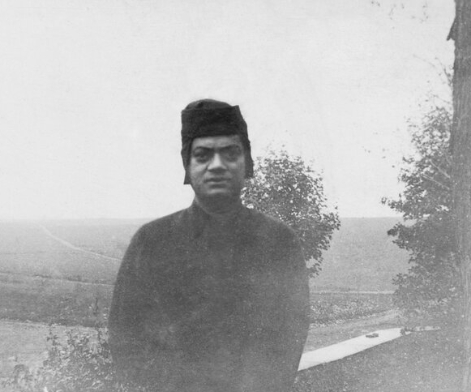
Swamiji, Kashmir. 1897.
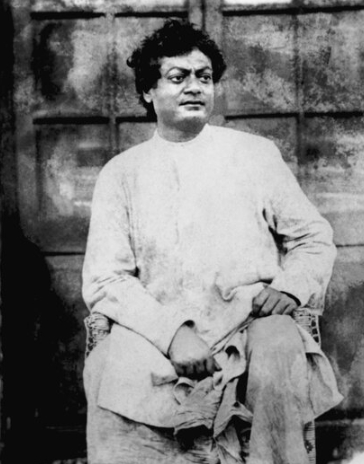
Swamiji in Shillong. 1901.
He has been ill.
[I suggest he may have had recurring malaria for many years, from his regular fever spells which knocked him out, sometimes being able to rest but also holding to his schedule and soldiering through a lecture – quite killing! A debilitating disease. Further, he smoked.].
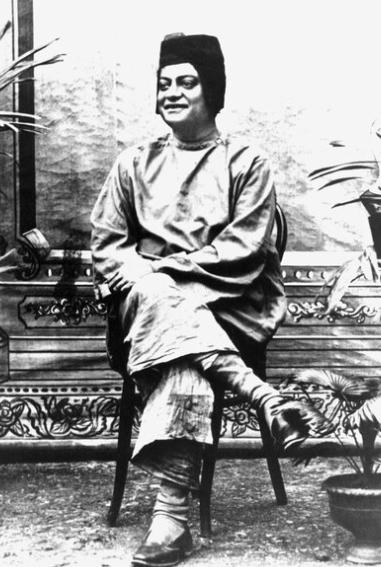
Swamiji in Shillong. 1901.
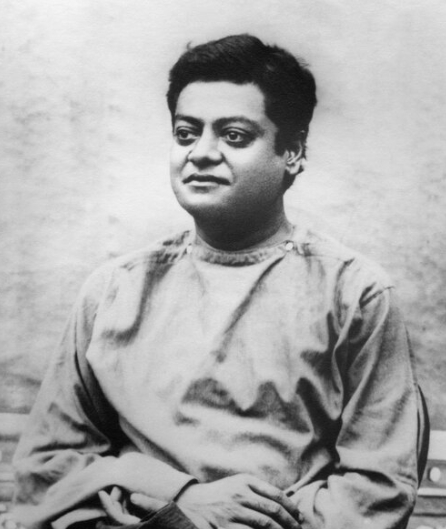
Swamiji in Shillong. 1901.
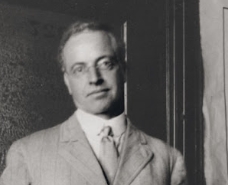
Thomas Allen – ‘I have heard a man this evening, but he’s not a man he’s a God!’ Said to his wife on returning from Swamiji’s lecture. They became close friends of Swamiji and very active members in the Vedanta Society of San Francisco.
He was a naval architect working at the shipyard in San Francisco. He enabled Swamiji to attend a ship launching ceremony which is well described. ‘Like giving birth’, Swamiji’s comment!
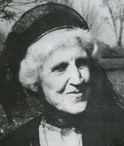
Josephine MacLeod, 1858-1949.
‘Nonsense! Please open the door right now!’ –
Great supporter of Swamiji (she was a sister of Betty Leggett). After Swamiji’s death she stayed at Belur Monastery frequently, where she found much solace. On one voyage she left the ship while it stopped over in Chennai and she went to the Vedanta Centre.
She took a taxi and reached the centre around 1.00 pm. The shrine was closed. She said to the head monk, ‘I want to go to Swamiji’s room’. The reply was, ‘Swamiji is resting now. You will have to wait till 4.00 pm’.
‘Nonsense! Swamiji is resting! If he were alive he would have come to receive me at the port. And you say he is resting! Please open the door right now!’
The room was unlocked, Ms MacLeod shown in, Swamiji’s photo placed on the pillow and she remained for a period seated on his bed with closed eyes. She then went back to the ship.
‘Your Slippers Religion!’
Josephine MacLeod was on her first visit to Belur Monastery after Swamiji’s death and they kept reminding her to take off her shoes before entering shrines. She refused after a while calling it, ‘Your Slippers Religion’.
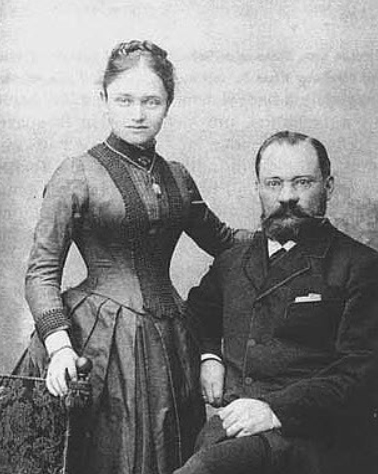
Ericka and Prof Paul Deussen. He was professor of Sanskrit at Kiel University. Swamiji visited him for 3 days in Kiel (well described by Swamiji) and then the Professor followed Swamiji all the way to London, over some 3 weeks, in order to keep up the discussion! Deussen was a class mate with Nietzsche. They corresponded for some years – Nietzsche also studying the Hindu scriptures in Sanskrit. Ericka was to spend much effort in collating her husband’s work after his death. Nietzsche – ‘No one but you yourself can build the bridge on which you alone must cross the stream of life.’ – Pure Vedanta. Pure Swamiji.
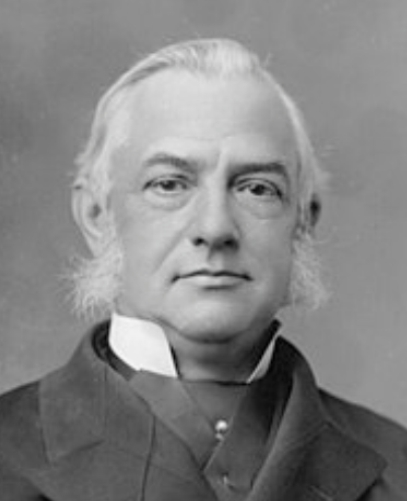
Professor Max Muller,
A professor at Oxford university. Swamiji met him (and his wife) at Oxford, he then quite old, and they had a wonderful discussion. Swamiji had corresponded earlier with him and had provided the descriptions for Prof Muller to write the first book on Ramakrishna’s life and sayings. Interestingly, Prof Muller also corresponded with Prof William Hastie, the Divinity Professor at Glasgow university. When in Kolkata as rector of the Scottish Church College, Hastie had visited Ramakrishna. (those letters yet to be researched).
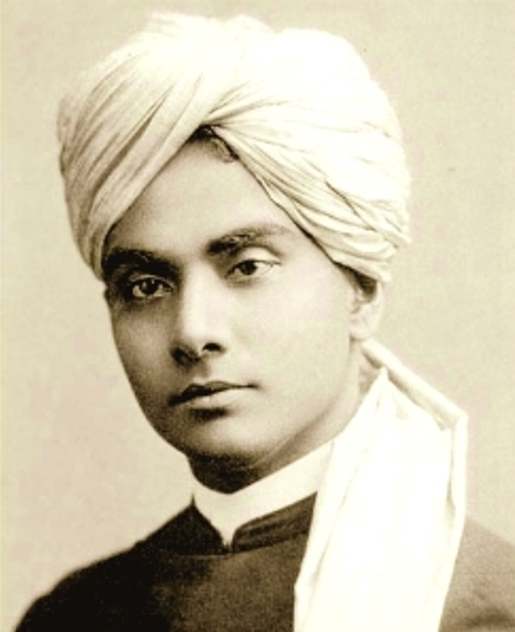
Swami Abhedananda.
He was the first to follow and help Swamiji with his work (arriving in NY in 1897), and became the New York resident monk for 20 years.
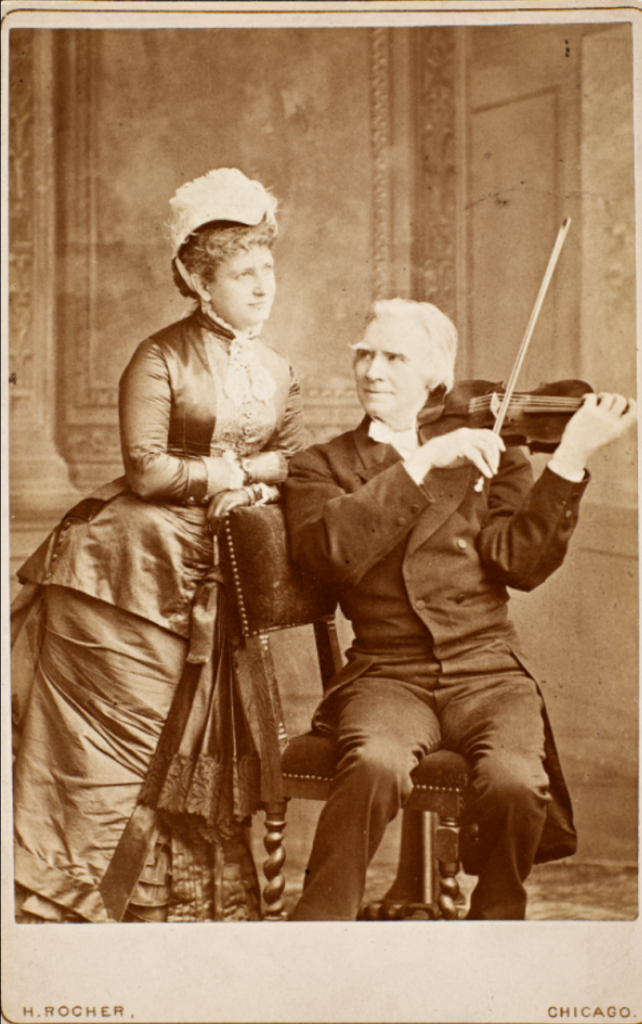
Emma Thursby and Ole Bull
– she a famous concert singer and he, a brilliant violin virtuoso. What a wonderful combination they must have been, if you like that sort of thing! Taken in Chicago in the 1879 after a concert. (Ole Bull was to die in 1880). This is how Emma Thursby and Sara Bull became close friends. H. Rocher has many photographs in various collections.